
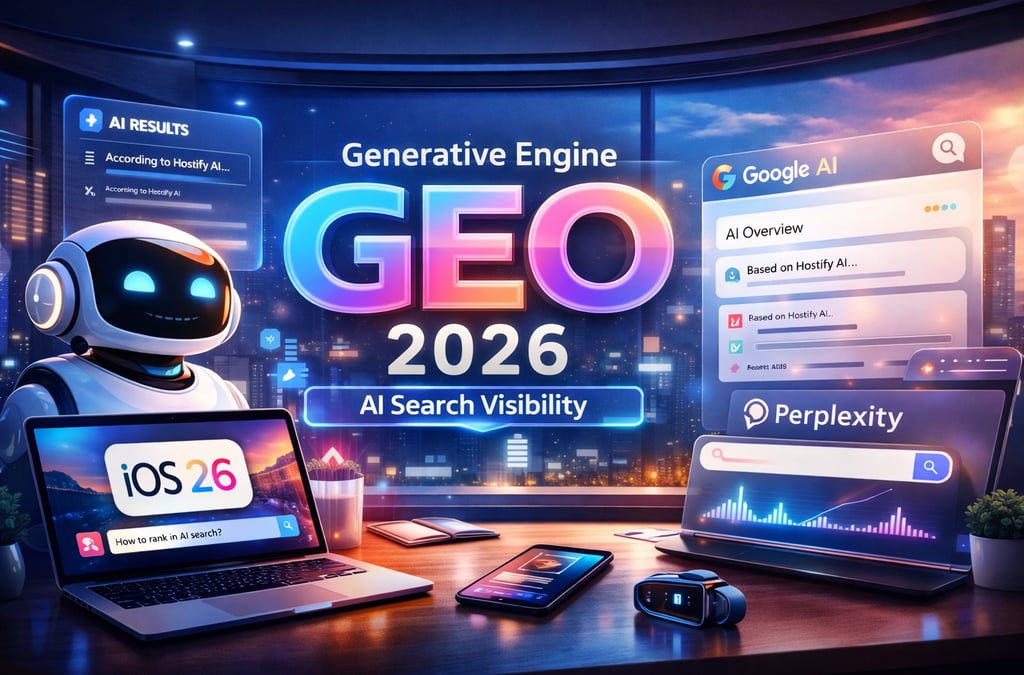
Generative Engine Optimization (GEO) in 2026: AI Search Guide
Learn Generative Engine Optimization (GEO) in 2026 and discover how to rank on ChatGPT, Perplexity, and Google AI search to boost global traffic and visibility.
AI TOOLS
4/19/20262 min read
Introduction
Search is no longer what it used to be.
In Tier 1 countries like the United States, United Kingdom, and Canada, millions of users are skipping Google search results and going straight to AI tools like ChatGPT and Perplexity AI.
That means something critical:
Even if your blog ranks #1… AI might still ignore it.
Instead, AI engines are extracting answers directly—and only citing content that’s structured the right way.
I’ve personally seen blogs lose traffic despite strong SEO—while smaller blogs started getting traffic simply because they adapted to AI-friendly formats.
In this guide, you’ll learn how to stay ahead of this shift.


What is Generative Engine Optimization (GEO)?
Generative Engine Optimization (GEO) is the process of structuring your content so AI search engines like ChatGPT, Perplexity AI, and Google AI Overviews can extract, understand, and cite your content in their responses.
What is Generative Engine Optimization (GEO)?
Generative Engine Optimization is the next evolution of SEO.
Instead of optimizing for rankings, you optimize for AI visibility and citations.
In simple terms:
SEO = Get clicks
GEO = Get mentioned
Real-World Example (USA Context)
A freelancer in the US searches:
“Best AI tools for beginners in 2026”
Instead of clicking links, AI tools directly show answers—and may cite only 2–3 sources.
If your content is structured correctly, you become one of those sources.


The “Meeting → Meaning” Framework (Advanced GEO Strategy)
Want to stand out from 90% of bloggers?
Use AI tools like:
Granola AI
Step-by-step workflow:
Record expert discussions
Extract key insights
Convert into structured content
This creates high-trust, experience-based content AI prefers
Why Your Content Is Not Showing in AI
Here’s the harsh reality:
Most blogs fail because they:
Write long paragraphs
Avoid structure
Don’t answer directly
Ignore AI optimization
Result: No visibility in AI responses.
Technical GEO (The Hidden Factor)
Even great content can fail if technical setup is wrong.
Check these:
Robots.txt file
AI crawler access
CDN/firewall settings
Blocking bots = blocking your growth
Conclusion
The shift from traditional SEO to AI-driven search is real—and it’s already happening.
From my experience, even when rankings stay the same, traffic can drop because users are now relying on tools like ChatGPT and Perplexity AI for instant answers. But when I adapted my content—making it more structured, clear, and answer-focused—I started gaining visibility again through AI mentions.
The biggest lesson?
Ranking is no longer enough
Structure + clarity = visibility
Experience-driven content wins
GEO isn’t just a trend—it’s the future of how content gets discovered.
So moving forward, focus on creating content that AI can easily understand, trust, and extract.
Because in 2026, success doesn’t come from being #1 on Google…
It comes from being the answer AI chooses.
Generative Engine Optimization (GEO) in 2026
Generative Engine Optimization (GEO) in 2026
HostifyAi
Helping you discover the best AI tools, grow your online business, and make smarter digital decisions.
Contact
© 2025. All rights reserved.