Best Tools Every Small Business Needs to Get Started
Starting a small business is honestly one of the most exciting journeys… but at the same time, it can also feel a little confusing in the beginning.
Most people have a great idea, the motivation is there, but the real question comes when you actually start:
“What do I need to run this business properly?”
And trust me, this is something almost every new business owner thinks about.
From my own experience, I’ve seen that success is not only about having a strong business idea — it’s about using the best tools for small businesses that make your work easier, faster, and more professional.
The best part is, you don’t need a big office, a huge team, or a massive budget to get started.
Today, even small businesses can grow smartly with the help of the best tools for small businesses, whether it’s for branding, marketing, payments, or daily management.
In this blog, I’m going to share the top 10 best tools for small businesses to get started — the same kind of tools that successful entrepreneurs use to manage their business smoothly from day one.
So let’s go step by step, like a friend guiding you through it.
The Best Tools Every Small Business Needs
1. Google Workspace (Professional Business Setup)

The first thing every business needs is professionalism.
Google Workspace gives you:
Business email (yourname@yourbusiness.com)
Google Docs, Sheets
Google Drive storage
Calendar and meetings
Example:
Instead of using “business123@gmail.com”, you look serious with “support@yourbrand.com”.
This builds trust instantly.
2. Canva (For Branding and Design)

Canva is a life-saver for small business owners.
You can create:
Logos
Instagram posts
Flyers
Business cards
YouTube thumbnails
Even if you have zero design skills, Canva makes it easy.
most small businesses today run their marketing only with Canva.
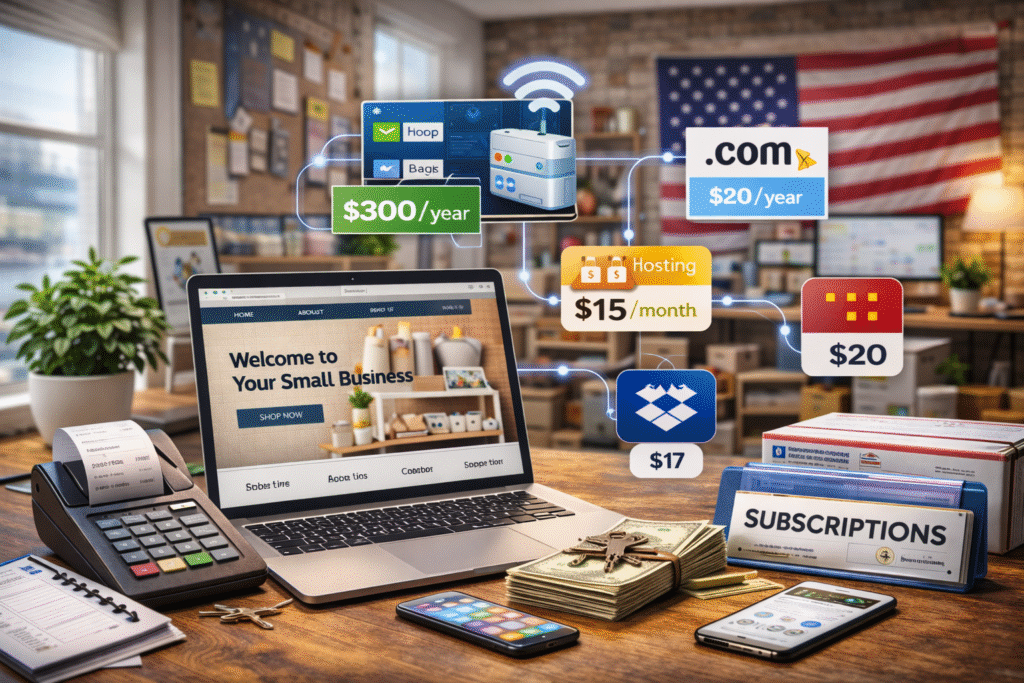
3. Shopify or WordPress (To Build Your Website)

If your business is online, you NEED a website.
Two best options:
A website is like your digital shop.
Instagram can disappear tomorrow, but your website stays yours.
4. Razorpay / PayPal (Payment Collection Tool)

Getting paid should be simple.
Payment tools help you accept:
UPI
Debit/Credit cards
International payments
For Indian businesses, Razorpay is perfect.
For global clients, PayPal works best.
money flow is the heartbeat of business.
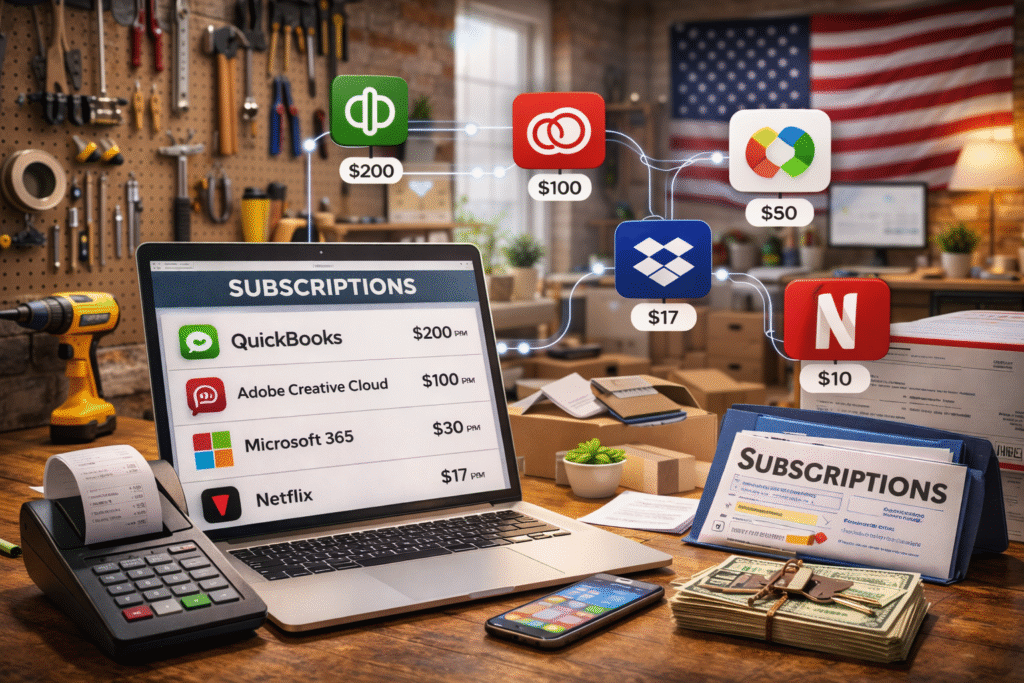
5. QuickBooks or Zoho Books (Accounting Made Easy)

Most people ignore accounting in the beginning…
And later they struggle.
These tools help you manage:
Income
Expenses
Invoices
Tax reports
Example:
Instead of writing everything in a notebook, you get full financial clarity.
AdSense-friendly and legit business practice.
6. WhatsApp Business (Customer Communication)

WhatsApp Business is not just chatting.
It gives you features like:
Auto replies
Business profile
Catalog
Quick responses
small businesses grow faster when communication is fast.
Most customers prefer WhatsApp over email.
7. Trello or Notion (Task and Work Management)

If you want to stay organized, use a planning tool.
Trello helps you track:
Daily tasks
Orders
Content planning
Team work
Notion is like an all-in-one workspace.
Even solo business owners use it to stay productive.
8. Mailchimp (Email Marketing Tool)

People think email is old…
But keep that in mind, email marketing is still one of the highest ROI tools.
Mailchimp helps you:
Collect emails
Send newsletters
Promote products
Build loyal customers
Instagram followers may scroll away, but email subscribers stay connected.
9. Google Analytics + Search Console (Track Growth)

If you have a website, you must track performance.
These tools help you understand:
Who visits your site
What pages perform best
Which keywords bring traffic
Website errors
this is like having a business GPS.
Without tracking, you’re driving blind.
10. AI Tools Like ChatGPT (Smart Business Assistant)

Now we are in 2026.
AI is not optional anymore.
AI tools help small businesses with:
Writing content
Generating ideas
Customer support scripts
Social media captions
Business planning
Example:
A solo entrepreneur can do the work of 3 people using AI.
But remember — AI is a tool, you are the brain.
Ai Tool Comparison Table (Quick Overview)
| Tool Name | Best For | Key Benefit | Ideal For Beginners? |
|---|---|---|---|
| Google Workspace | Business email + documents | Professional setup and team collaboration | ✅ Yes |
| Canva | Design and branding | Create logos, posts, and marketing visuals easily | ✅ Yes |
| WordPress / Shopify | Website building | Build your online presence or store | ✅ Yes |
| Razorpay / PayPal | Payments | Accept payments smoothly and securely | ✅ Yes |
| Zoho Books / QuickBooks | Accounting | Track income, expenses, and invoices | ✅ Yes |
| WhatsApp Business | Customer communication | Fast support with auto-replies and catalog | ✅ Yes |
| Trello / Notion | Task management | Organize work and business planning | ✅ Yes |
| Mailchimp | Email marketing | Build audience and increase repeat customers | ✅ Yes |
| Google Analytics | Website tracking | Understand traffic and customer behavior | ⚠️ Medium |
| AI Tools (ChatGPT etc.) | Automation + productivity | Save time with content and business support | ✅ Yes |
Real Experience Example
Let me give you a real-life style example:
Imagine you start a small online business selling handmade products.
At first, you try managing everything manually.
Then you use:
Canva for product posts
Shopify for your store
Razorpay for payments
WhatsApp Business for customers
Trello to manage orders
Mailchimp to build repeat buyers
Now suddenly, your business looks professional and runs smoothly.
That’s the power of tools.
10 Most Important FAQs -
1. What tools do I need to start a small business?
You need tools for email, payments, marketing, accounting, and customer communication.
2. Are these tools free?
Many tools have free plans, but premium versions unlock more features.
3. What is the best tool for small business marketing?
Canva + Mailchimp + Google Analytics is a powerful combo.
4. Do I really need a website?
Yes bro. A website builds trust and gives you full control.
5. Which tool is best for receiving payments in India?
Razorpay is one of the best options.
6. What is the best accounting tool for beginners?
Zoho Books and QuickBooks are beginner-friendly.
7. Can AI tools replace employees?
Not fully, but AI can reduce workload and save time.
8. What tool helps manage daily business tasks?
Trello or Notion is perfect for planning and organization.
9. Is WhatsApp Business better than normal WhatsApp?
Yes, because it has business features like catalog and auto-replies.
10. How do I choose the right tools?
Start with basic needs first, then upgrade as your business grows.
Conclusion
Starting a small business is not just about working hard…
It’s about working smart.
And the smartest thing you can do is use the right tools from Day 1.
These tools will help you:
✅ look professional
✅ save time
✅ manage customers
✅ track growth
✅ build a real business system
you don’t need to do everything alone.
Tools are like your business team.
Start simple:
Pick 2–3 tools today, and slowly build your full setup.
Your future self will thank you.